Skills That Show Up in Games.
On-Court Skills · Speed & Athleticism · Strength & Conditioning
I train basketball players who are hungry to get better: beginners building their foundation, players fighting for playing time, and athletes trying to reach the next level. The work happens on the court and in the weight room.
You Don't Have to Be
the Most Gifted Player.
I got into training because I wasn't the most naturally gifted player and the system kept failing me. I know what it feels like to put in the work and not get the shot you deserve. That's who I built this for, but I work with players at every level.
Skills built the right way, through games, challenges, and competition that wire habits in without it feeling like work. Point systems and friendly rivalries keep players locked in. Just movement, skill, and confidence.
Skills trained in game situations with an emphasis on specific technique. Athleticism built from the ground up: learning to sprint, jump, and lift correctly, exposed to a wide range of plyos and strength work. Learning how to train is a skill, and this is where it starts.
Technique fine-tuned for high-level competition. Athleticism measured and improved on specific metrics. A body built to handle a full season without breaking down.
On the Court.
And Off It.
Ball Handling, Driving & Creation
Footwork, change of direction, dribble moves, tight ball control, driving through contact, creating separation, and knowing when to use each of these. Creating advantages for yourself and opportunities for teammates.
Shooting
Making it feel smooth and easy across all situations: off the dribble, catch and shoot, running into your shot, creating space. Reading the defense to know when to pull the trigger. Built on the biomechanics of what makes a shot repeatable under pressure.
Finishing at the Rim
Reacting to what the defense gives you and picking the right finish: around length, through contact, both hands, off the glass. Finishing is a reactive skill, not just a set of rehearsed moves. Most players never train it that way.
Passing & Decision-Making
Reading the floor, making the simple play, identifying the highest-percentage option. Decisions based on your skill set, the situation, and your teammates' abilities. Being a threat to score or pass, which makes both options better.
Defense & IQ
Staying in front of your player, pressuring them, forcing mistakes, and being in the right spots. Defense gets you on the floor. IQ keeps you there, and it's teachable.
Speed & First Step
Acceleration and change of direction built on actual sprint mechanics and force production, not just agility ladders. Teaching the body how to move fast, not just how to move quickly through a pattern.
Explosiveness & Vertical
Jump training built around the physics of force and ground contact time. A wide range of plyometric work to build real power that shows up in games, not just in a testing session.
Strength Foundation
Learning to train is a skill. We start with the basic movement patterns (squat, hinge, push, pull) and build from there. Exposed to a variety of exercises and methods so the body learns to be athletic in more than one way.
Mobility & Injury Prevention
Movement quality and joint health built into every program. Staying healthy isn't luck. It's the result of how you train.
Nutrition Guidance
Fueling for training, supporting strength development, and building a body that handles a long season. I provide practical guidance on eating for performance. For players who need deeper support, I have a direct connection to the registered dietitian for UConn Basketball.
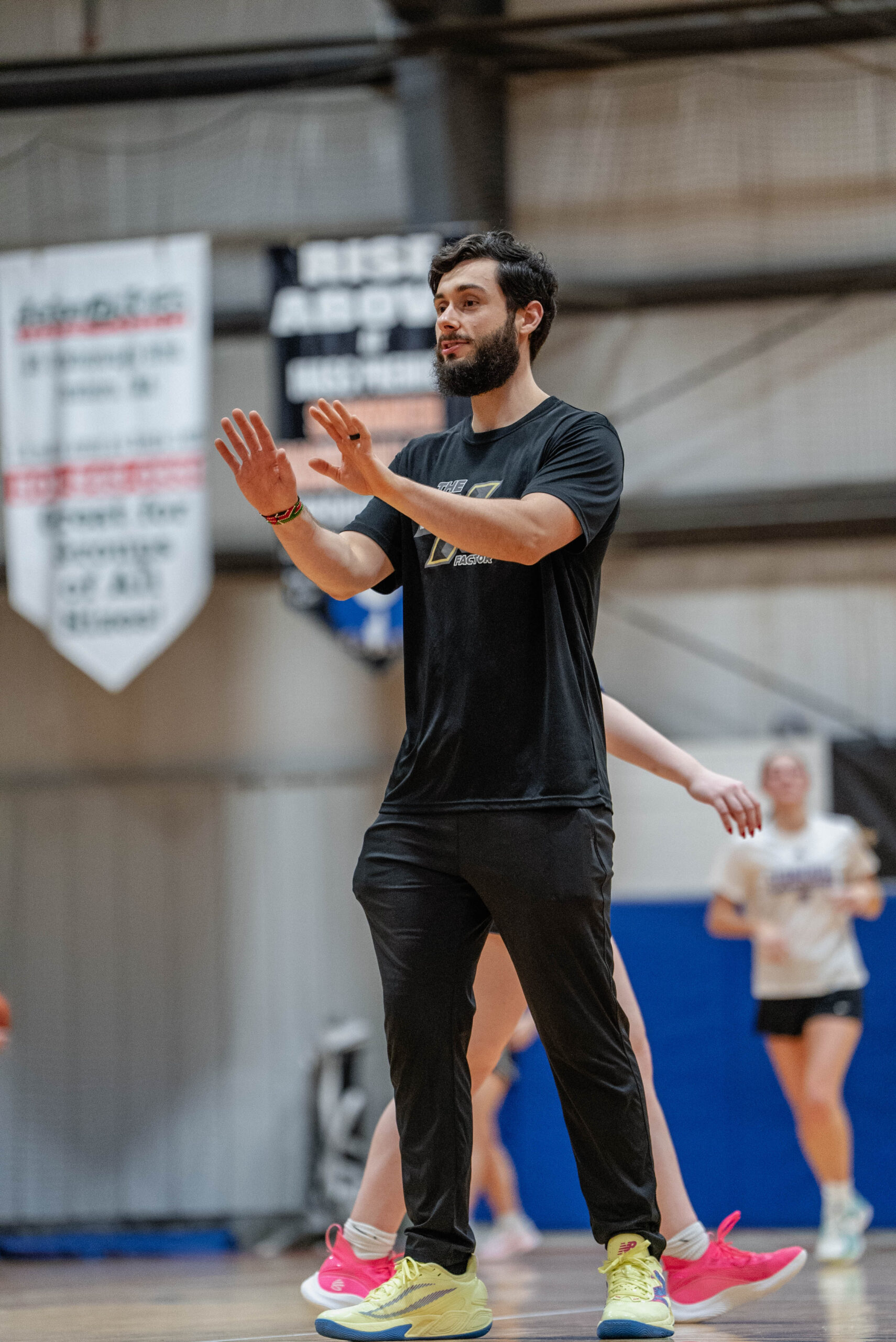
Training That Actually Transfers.
A lot of basketball training looks great in the gym and disappears in games. The reason is almost always how skills are trained, not just what skills are trained.
Skills are learned through constraints: rules, challenges, and competitive situations that force you to solve real basketball problems. Decision-making, pressure, and variability aren't extras we add later. They're built into every drill from the start. That's what motor learning science tells us actually works. Skills trained that way stick when it counts.
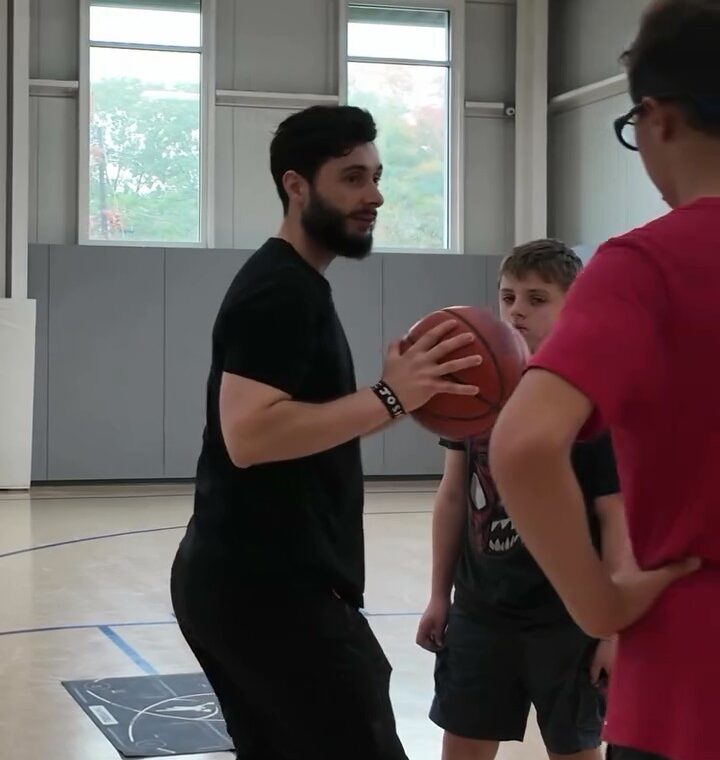
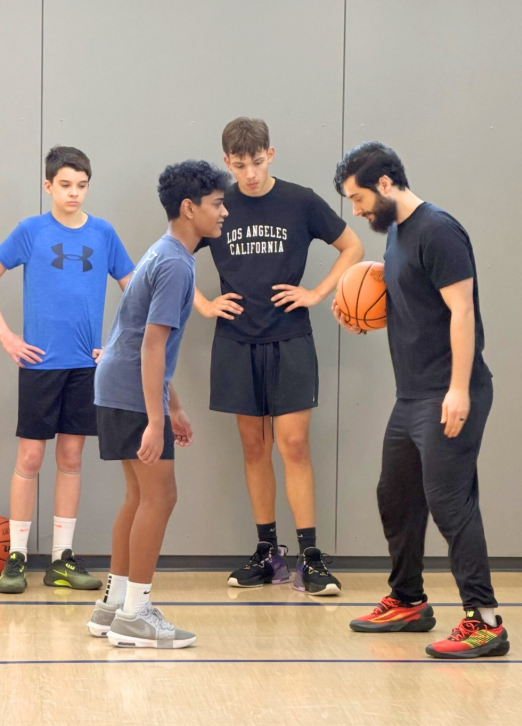
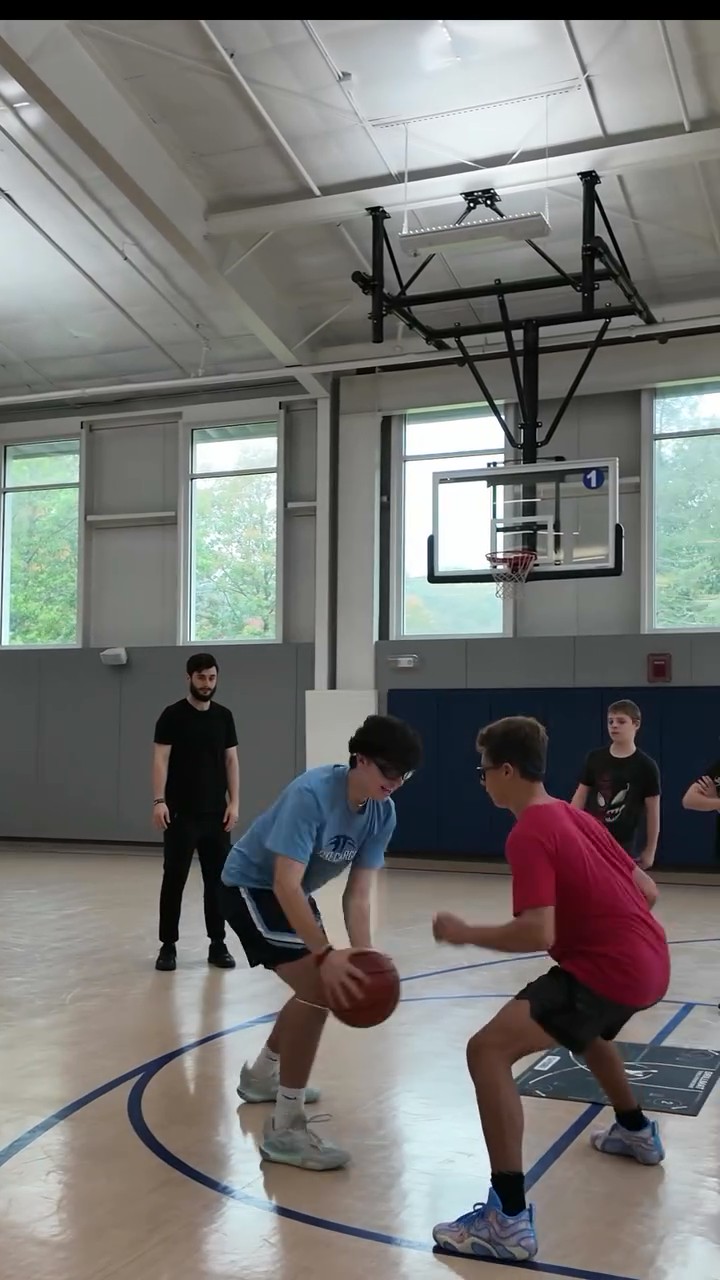
For young players, that means games, point systems, and competition that wire habits in without it feeling like homework. For older players, it means reps that look like the exact situations they'll face in games, at the speed and pressure of real competition.
The same precision applies to athleticism. The biomechanics of sprinting, jumping, and changing direction are well understood, and most S&C programs ignore them. I build programs around what actually produces speed and power, not just what looks hard.
Training Options
All programs run on a monthly basis. Group training is where most players start, and the competition and accountability push everyone harder.
Train with other players at a similar level. The competition makes everyone better. The game situations, speed work, and strength training we do all benefit from training alongside others.
- Grouped by age, level, and goals
- Skills, strength & speed all in one program
- Game-situation training and live reps
- 4–12 sessions per month
- Consistent weekly schedule
- Training app with workout tracking
- Adirondack Club members: 25% off
Full individualized attention on your specific needs. Great for detailed skill work, working around an injury, or supplementing team practice.
- 100% individualized focus
- Skills, S&C, or both
- Flexible scheduling
- Training app access
- Adirondack Club members: 25% off
Full programming and coaching wherever you train. Skill development plans, S&C programs, and regular check-ins built around your schedule.
- Custom program built for you
- Online evaluation to start
- Ongoing check-ins and messaging
- Skill development and S&C options
- Train anywhere, any time
Real Results.
Speak for Themselves.
"If you're looking for elite basketball training or a strength and conditioning coach, I highly recommend Josh Shuman Training. My son has been working with Josh for over a year — his focus and effort every session is the reason he's seen so much progress."
"My son trains with Josh for both basketball skills and fitness, and we couldn't be happier. His basketball skills have noticeably improved, and his overall strength, conditioning, and confidence have made a real difference."
"Josh turned around my son's disliking of basketball due to a previous bad experience with a coach. He has made such progress in shooting, ball handling, and overall confidence. It is Josh's goal to never be a player's last coach."
"Josh has worked with my son for over a year and in that time his basketball skills have improved dramatically. His ball handling, form, and moves like his drop step, euro step, and crossover have all been getting so much better."
"Josh is an incredible performance coach. Not only has he helped my son Tommy get stronger physically but also mentally. 'Josh is amazing — it's now showing with how many home runs I have hit.' It is the best when your son comes walking out with a huge smile on his face."
"Josh has been working with my son for about a year on basketball skills as well as strength and endurance training, and we've seen real growth. He is knowledgeable, thoughtful, and very intentional in how he works with young athletes."
"Coach Shuman demonstrated great knowledge of the game and its fundamentals. He also took the team through strength training designed specifically for basketball athletes. But his greatest coaching attribute was his devotion to each and every one of us. He truly cared about the team and helping us succeed — he created a strong bond with everyone in the program. I speak for the entire team when I say we were sad to see him go."
The Game.
Skill breakdowns, coaching concepts, and the reasoning behind how and why certain things work on the court. Not just footage. Content you can actually learn from.
Good Questions.
Real Answers.
No, this is a persistent myth that the research has repeatedly disproven. Properly designed strength training for young athletes is safe, beneficial, and actually supports healthy development. The real risk factors for injury in young athletes are overuse and sport specialization too early, not strength training done well.
That's exactly who this is built for. I got into coaching because I wasn't the most naturally gifted player and the system kept failing me. I know what it feels like to put in the work and not get the shot you deserve. Players who are earlier in their development get just as much out of this, sometimes more.
Nothing is wrong. That's actually the point. Motor learning research is clear that struggling during practice, making mistakes, and working through difficulty is what actually drives long-term skill retention. Training that feels too easy usually isn't sticking. If it were easy in the gym, it would disappear in a game.
Most players notice real changes fairly quickly. Within the first few weeks they start feeling more comfortable with certain skills and moving better. How fast the gains come, and how big they are, varies a lot by player, age, starting point, and how consistently they train. What I can tell you is that no one gets worse. Progress isn't always linear, but it shows up.
Players will leave sessions with drills they can take home and work on on their own, so there's always something specific to practice, not just vague reps. Beyond that, getting into games and unstructured play is important. That's where you find out what's actually sticking and what isn't. When a move breaks down in a pickup game or a shot isn't falling, that tells you exactly what to bring back into training. The gym and the game are supposed to talk to each other.
Yes, and honestly it's often the best time to train. What players work on in individual sessions shows up in practice faster when they're playing regularly. We build around whatever schedule they already have.
Both. Skills and S&C are separate programs you can do individually or together. A lot of players focus only on skills and leave athleticism on the table: speed, explosiveness, and strength are trainable, and they make every skill better.
Basketball training runs at The Adirondack Club in Franklin, MA and at X Factor Hoops in Foxboro, MA. Strength and conditioning is at The Adirondack Club's weight room and turf facility. Online coaching is available anywhere.
Let's See What You're Working With.
Fill out the intake form and I'll reach out personally to go over your goals and figure out the right evaluation session. No pressure, no commitment until we've talked.
- Tell me about the player and what they're looking for
- I'll reach out within 24 hours
- We'll figure out the right evaluation together
- Skill assessment, S&C evaluation, or both
Evaluation Options
After your intake form, we'll confirm which session fits. Here's what's available:
Skills Evaluation
On-court skill assessment: ball handling, shooting, finishing, movement patterns.
Skills + Strength & Speed
Full evaluation: on-court skills and off-court athleticism testing.
Strength & Speed Only
Off-court athletic assessment: strength baselines, movement, speed, power.
Pricing covered when I follow up. Varies based on program and membership status.