
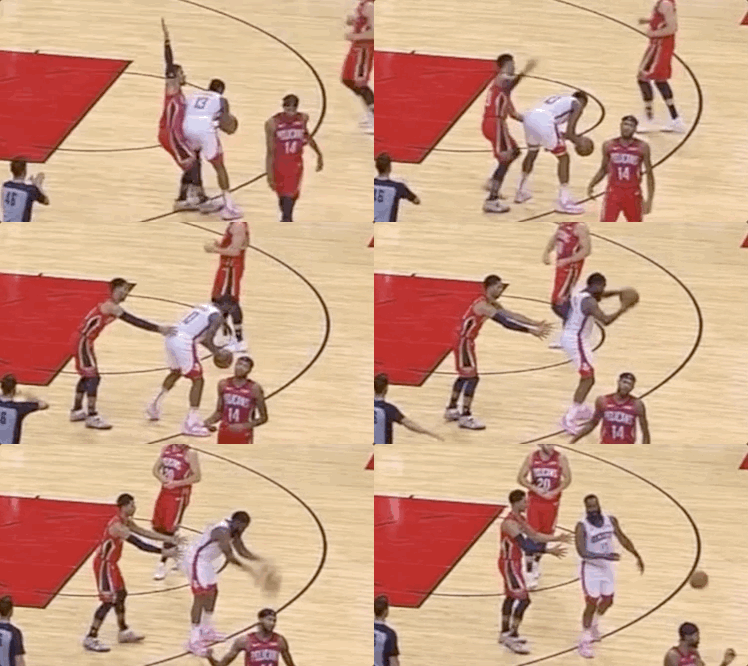
I had a middle schooler who reacted to every single mistake like it had personally wronged him. Missed shot, pounded the ball. Sloppy handle, threw his hands up. Bad footwork rep, completely checked out for the next three. It didn’t matter what we were working on. Shooting, dribbling, footwork patterns, reads off the drive. Every single error was a small crisis.
The problem wasn’t his skill. It was that he was using every rep to judge himself instead of learn anything. He stopped training with me after a while, never really pushed himself on his own, and when high school came around the gap had gotten too wide. He couldn’t get on the floor. Not because he wasn’t athletic enough. Because he never let the reps actually teach him anything.
Then there’s a player I’ve been working with since he was 10. Every drill, he wanted it harder. Every mistake, already on to the next rep. Didn’t matter if it was a missed shot, a broken handle, or footwork that fell apart completely. He just went again. He put in reps on his own for years because training didn’t feel like punishment, it felt like a challenge he was trying to solve. He’s 12 now, playing and training a full level up. One of them made training harder on himself than the actual drills were.
Your Brain Actually Needs the Mistakes
Here’s something most people don’t know and it changes how you think about every rep you take. Research in neurology has found that mistakes are actually vital to the development of skill circuits. Not just okay. Vital. The error is not the problem. The error is the mechanism. Your nervous system needs to feel the wrong version to figure out the right one.
Think about learning a new crossover. The first hundred times it’s going to break down. The ball is going to bounce off your foot. Your footwork is going to be off. Your timing is going to be late. That’s not failure. That’s literally how the skill gets built. When you react to a bad rep, you’re not just wasting time emotionally. You’re cutting off the signal your brain was trying to send. You just threw away the most useful part of the rep.
Research by Carol Dweck found that praising effort and process rather than outcomes puts athletes into a growth mindset where they seek out challenges and actually enjoy the hard parts. That’s not a personality type. That’s a trained response. And you can train it deliberately, which is the whole point of this post.
[photo: young player working on ball handling drill, mid-rep]
What the Pros Actually Do
Watch Steph Curry lose the handle in a workout. He’s already setting up the next dribble before the ball finishes rolling away. Watch KD get his footwork wrong on a post move in practice. Same expression, same pace, next rep. Watch Kobe footage from his early morning workouts. Miss after miss after miss on pull ups, on footwork drills, on finishing sequences. Same face every time. Not because they don’t care. Because they’ve trained themselves to treat the rep as information and nothing else.
This isn’t just about shooting. Kobe talked specifically about footwork drills where he’d run the same move hundreds of times knowing most of them were going to be wrong. That was the point. Elite athletes understand that errors are part of high performance and a necessary way to learn new skills. Instead of spending energy trying to avoid mistakes, they learn how to move past them quickly.
The reaction is the thing they’ve eliminated. Not the mistakes. The mistakes are still there at every level. They just stopped letting them cost anything extra.
[video: Kobe or Steph workout footage showing quick reset after mistakes]
It Shows Up in Every Skill
This is not just a shooting thing. That’s worth saying clearly because most people picture missing shots when they think about reacting to mistakes. But it shows up everywhere.
A player learning a new crossover combination who stops every time it breaks down is going to take three times as long to get it as someone who just keeps going. A player working on footwork for their first step who resets and sulks after every bad rep is training the reset and the sulk just as much as the footwork. A player practicing reads off the drive who gets frustrated every time they make the wrong decision is going to stop taking risks on reads, which means they stop developing them entirely.
The skill doesn’t matter. The response to the mistake is the same problem every time.
For younger players this is even more important. If you’re 10 years old and you’re learning to dribble with your left hand, it is going to look terrible for a while. That is not a sign that you can’t do it. That is just what learning a new skill looks like. Every single player you’ve ever watched who has a good left hand went through a phase where their left hand was embarrassing. Every one of them. The only difference between the ones who got there and the ones who didn’t is who kept going anyway.
[video: player working through a new dribble combination, mistakes and all]
The Three Players and What They Show
The 10-year-old who loved the challenge is now 12 and training up a level. Two years of consistent reps that actually meant something because he never got in his own way. Every drill, every skill, every time something broke down, he just went again. That compounds fast.
The middle schooler who reacted to everything stopped accumulating. Every session had a ceiling because half the reps were getting interrupted by the response to the previous one. The work was there. The learning wasn’t. By the time high school came around the gap was too wide.
Then there’s the high schooler from the newsletter. Quiet kid. Came in struggling across the board. Inconsistent shooting, shaky handle under pressure, footwork that broke down when things got fast. She never said much and she never reacted to anything. Missed a three, already setting up the next catch. Lost the handle, picked it up and went again. Footwork fell apart on a drill, reset and ran it again without changing her expression.
Because she never got in her own way, every rep counted toward something. The shooting got more consistent because she was actually in the rep instead of managing her feelings about the last one. The handle got cleaner because she kept running it at full speed even when it was breaking down. The footwork got sharper because she never slowed it down to protect herself from messing up. Now her team trusts her to take the shot when they need a bucket. That didn’t happen because she was naturally gifted. It happened because she let the work do what work is supposed to do.
[photo: player setting up for a catch and shoot, calm and locked in]
How to Actually Train This
Understanding it is one thing. Building it is another. Here’s what actually works.
Stage it deliberately. When you’re learning something new, the first stage is just executing the movement. Not making shots, not getting the handle clean, not having perfect footwork every rep. Just doing the movement and staying in it. The makes and the clean reps come in a later stage. Mixing the stages up is where most players go wrong. You can’t evaluate the outcome of a skill you’re still learning the mechanics of. That’s like grading a test you haven’t studied for yet and deciding you’re bad at the subject.
Use the No Reaction Rule. Any drill you’re already doing. Visible reaction and the rep doesn’t count even if it was a make. No reaction and the rep counts. No head drops, no ball slams, no sighing, no throwing hands up. This makes neutrality the actual goal of the drill. You’re training the response directly instead of hoping it develops on its own.
Stay in the rep. The next rep is the only thing that’s actionable. The last one is done. Staying with it costs you the next one. This sounds simple until you’re in the middle of a drill and your handle keeps breaking down in the same spot. That’s exactly when it matters most. That’s also exactly when most players stop.
Let it be hard. Athletes with a growth mindset find success in doing their best, in learning and improving, not in performing perfectly. If training feels uncomfortable because you keep missing or your footwork keeps falling apart, you’re in the right zone. The players who only feel good when everything is working are the ones who stop pushing to the edge where the real improvement lives. Comfortable practice is almost always a sign you’re not actually getting better. Nobody gets good at anything by only doing the parts they’re already good at. Especially not in basketball.
[photo: player mid-drill, pushing through something difficult]
The Rep Already Happened
The middle schooler’s reps didn’t count for as much as they should have. Not because he wasn’t working. Because he kept interrupting the process right when it was supposed to kick in.
The 10-year-old’s reps compounded for two years straight. Same drills, same gym, completely different results. The difference was one rep at a time, every session, he just kept going.
That’s available to every player at every level. The 10-year-old learning to dribble with their weak hand. The high schooler trying to add a new move. The college player cleaning up footwork under pressure. It’s the same thing every time. Stay in the rep. Let the mistake do its job. Go again. The players who figure that out early are the ones who look like different people two years later. The ones who don’t are still arguing with their own reps.
If you want to work on this directly, fill out the form below and we’ll figure out where to start.