
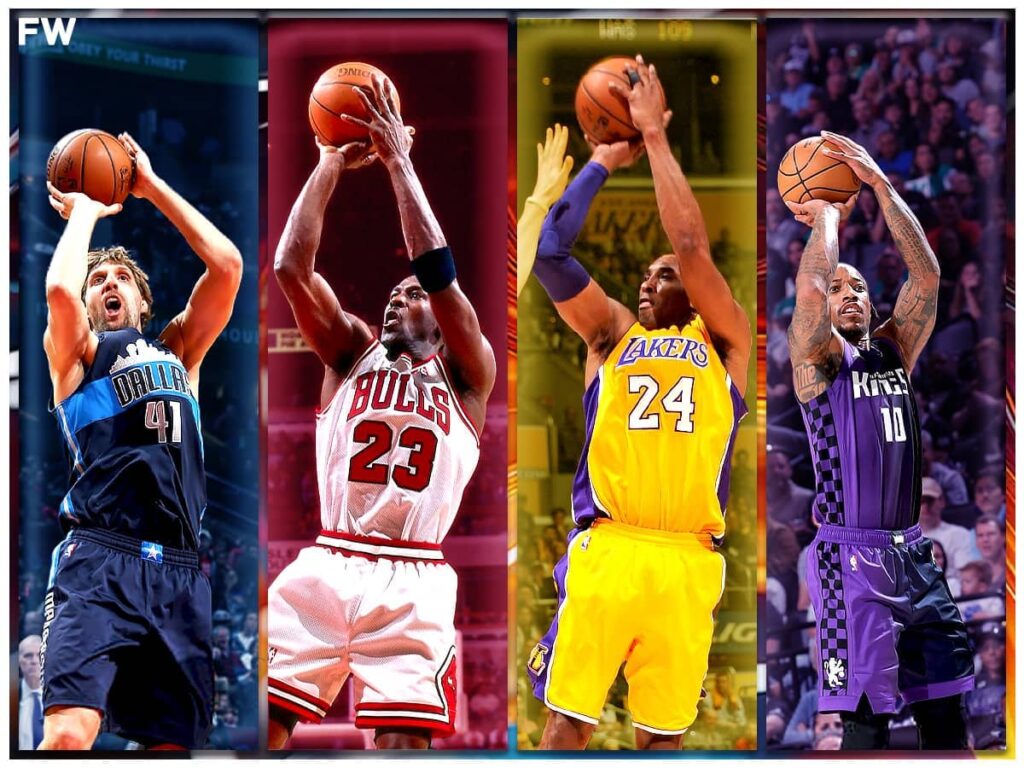
A high schooler I work with had a really clean catch and shoot stroke. Practiced it constantly. Rebounder feeding him, same spot, same setup, feet always set. In practice the guy was a problem. You could not leave him open.
Then he got into games and suddenly nothing felt right. The pass was a little late. He had to take an extra dribble. Someone was closing out harder than expected. And every time something was slightly off he’d come out of it shaking his head like his shot had just betrayed him.
It hadn’t betrayed him. He just had only ever practiced one version of it.
The Shot You Practice vs. The Shot You Get
Here’s the thing nobody really talks about when it comes to shooting. Your shot is never going to feel exactly the same twice. The catch is different every time. Your feet are rarely in a perfect spot. You’re more tired in the fourth quarter than the first. The defender closes out faster than you expected. The pass is behind you.
Every single one of those situations requires a slightly different shot. Fading left. Coming off a screen moving right. Completely wide open with time to think. Last second with a hand in your face and your legs already tired.
These are not the same shot. Treating them like they should feel identical is where players get stuck.
The goal isn’t to make every shot feel the same. The goal is to make every shot feel manageable no matter what the situation is. Easy and relaxed regardless of what’s happening around you. That’s a completely different thing to train for and most players never actually train for it. Most players are out here perfecting the rep they wish they got in games instead of the one they’re actually going to get.
[Video: game film showing different shot types, pull up, catch and shoot, fading, off the dribble]
What the Pros and Their Coaches Already Know
Joe Mazzulla, who just won a championship with the Celtics, has been pretty open about how he thinks about basketball. His whole thing is that it’s not rules-based anymore. It’s reads-based. Defenses change their coverage from possession to possession, so his players have to be ready to solve whatever they’re looking at in real time, not just execute a memorized answer.
That’s exactly what shooting under pressure requires. You’re not running a script. You’re reading what you’ve got and adapting. Jrue Holiday described Mazzulla’s approach after his first season in Boston as controlled madness. The chaos is the point. You practice it so the game doesn’t feel like something happening to you.
What the Research Says
Motor learning research has a concept called specificity of practice. Your nervous system gets good at exactly what you train it to do. Practice catch and shoot from the same spot with a cooperative rebounder and you get very good at exactly that situation. Not much else.
There’s also research on something called contextual interference, which basically says that mixing up practice conditions produces better long term retention and transfer to real game situations than clean repetitive practice. The reps look messier. The sessions feel less satisfying. But the learning sticks in a way that perfect isolated reps don’t.
Which is why a practice where nothing goes quite right might actually be doing more for you than one where everything felt clean. Your body needs to have already felt those situations. Otherwise every game rep feels like the first time.
Three Things That Hold Up No Matter What
There are a handful of mechanics that stay consistent regardless of what kind of shot you’re taking. These are your anchors when everything else feels different.
Keep the ball moving smoothly through your shot. No hitches, no pauses, no mid-motion resets. A smooth continuous motion gives you a better result than stopping to reorganize, whatever situation you’re in.
Land near the spot you shot from. Not perfectly, but close. Players who drift dramatically or fall sideways are usually fighting their own momentum instead of using it. Your landing tells you a lot about whether your body was actually ready for the shot.
Hold your follow through. Not as a superstition. Because it keeps your mechanics honest. If you’re yanking your hand back immediately it usually means something earlier in the shot wasn’t right.
Those three things work whether you’re wide open, fading, exhausted, or getting fouled. They give you something real to come back to when nothing feels quite right.
Learning to Describe the Problem
The middle schooler I mentioned had a different issue. He knew his shot felt off. Said it constantly. But that was as far as the diagnosis went. Just felt off. Nothing more specific than that.
The problem with “it feels off” is that it gives you nothing to work with. You can’t fix off. You can fix early, late, rushed, flat, no legs, ball too far back, elbow drifting. Those are things you can actually address.
Once we started asking him to describe what specifically felt different, everything changed. He started noticing patterns. Certain situations where he rushed. Certain passes that threw off his timing. And once he could name it he could practice it instead of just hoping the next rep felt better.
Players who develop that habit fix themselves. Players who just keep shooting and hoping eventually hit a ceiling they can’t explain.
The high schooler added game-like reps and within a few weeks the games stopped feeling foreign. His mechanics hadn’t changed dramatically. His body had just already been in those situations. The chaos wasn’t new anymore. And when it stopped being new it stopped feeling like a problem.
[Video: player working through different shot situations in training]