
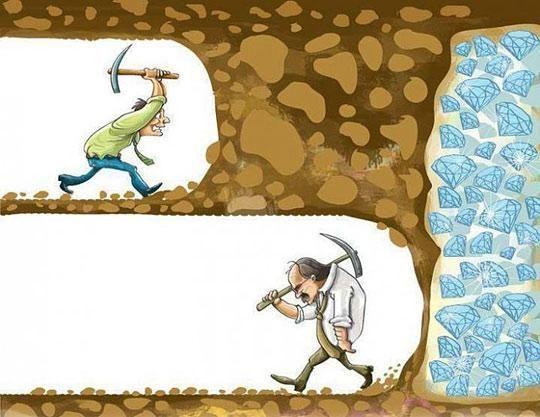
Three weeks in and nothing is happening. You’ve been consistent, mostly. You’ve been doing the thing, kind of. And now you’re starting to wonder if the thing even works.
This is the part where most people quit. Which is unfortunate, because it’s also usually right before anything real starts to happen.
The timeline between starting a habit and seeing actual results is longer and messier than anyone prepares you for. And the signals you get early, good or bad, are almost never the full story.
The First Month Is Lying to You
When you start something new your body does a lot of adjusting before it does any real changing.
Take strength training. The first several weeks of progress, weights going up, movements feeling easier, are almost entirely your nervous system getting more efficient at the pattern. Your brain is figuring out how to recruit the right muscles in the right sequence. Actual muscle tissue growth takes consistent work over months. Research on hypertrophy puts meaningful structural changes at a minimum of eight to twelve weeks of real consistent training. Most people are deciding whether lifting works at week three, which is roughly the equivalent of leaving a movie during the opening credits and telling everyone it was bad.
Weight loss has the same problem in the other direction. The scale in the first month is a genuinely bad feedback tool. Water weight, glycogen, hormonal fluctuation, sodium from whatever you had for dinner, all of it moves the number in ways that have nothing to do with actual fat loss. Someone can be in a consistent deficit and watch the scale go nowhere for two weeks then drop three pounds in four days. The trend over six to eight weeks is the data. Everything before that is just the scale being dramatic.
Mobility is the longest game of all.
Gravity is working on your body every hour of every day. If your joints don’t have the range needed for the tasks you’re doing, your body adapts and compensates around that limitation. It finds another way. Over months and years those compensations become the default. When we do mobility work we’re working directly against what your body has learned to do to survive upright in the world. That requires consistent repeated input over time. You’re fighting gravity’s full time job with part time hours. A few sessions isn’t going to move that needle. Neither is a month.
Before You Blame the Plan
Here’s a thing that happens constantly. Someone isn’t seeing results, so they start working backwards through every possible explanation. The program is wrong. The diet doesn’t work for their body. Their metabolism is broken. Their genetics are bad. Their coach doesn’t know what he’s doing. All of that gets considered before the much simpler question of whether the execution was actually there.
For weight loss the usual issue is accuracy. People think they’re tracking everything and they’re not. Drinks, cooking oils, handfuls of things that didn’t make it into the app, restaurant meals logged at half of what they actually were. A real deficit on paper can disappear completely in practice without anyone noticing. The second most common issue is movement outside the gym. Three solid workouts a week is a good start and not a complete plan.
For strength the culprits are usually inconsistency, not enough progressive overload over time, and not eating enough to support the training. You can do everything right in the gym and stall completely if you’re chronically under-eating or missing sessions every other week and telling yourself you’ve been pretty consistent.
For mobility and pain the most common issue is frequency. One hour of targeted work followed by twenty-three hours of the same patterns that created the problem is a slow race you are losing. The input has to compete with what gravity and daily life are doing the rest of the time. Once a week usually doesn’t cut it.
Before quitting anything, three questions. Is the consistency actually there? Is the execution actually right? And is something else canceling it out?
The Guy Who Almost Quit Tracking
A client came in convinced that calorie tracking didn’t work. He’d been at it a couple weeks, the scale hadn’t moved, and he’d basically already decided it was pointless.
When we went through it the consistency wasn’t really there. He was changing what he ate regularly, wasn’t confident in his logging accuracy, and outside of workouts he was barely moving. The tracking wasn’t the problem. The execution was.
We started by making sure everything he logged was actually accurate. Nothing else changed yet. Just that. And within a couple weeks he started seeing movement on the scale. Then we built meals he could eat long term without feeling like he was on a plan. Then we added a baseline step target to get him moving outside the gym.
Several months in, things that felt like a project at the beginning had become just how he eats and moves. He stopped thinking of it as tracking. It was just Tuesday.
That’s the other thing people miss. The goal isn’t just to do the habit. It’s to do it long enough that it stops feeling like one.
[Search: food tracking accuracy and consistency weight loss]
The Woman Who Almost Gave Up on Her Back
A client nearing retirement had been dealing with low back pain that wouldn’t quit. We were doing mobility work together and full body strength training. During sessions she felt good. That day, usually fine. Then the next day it would creep back in.
We kept at it but the results weren’t sticking the way they should have. Eventually we realized she wasn’t doing any mobility on her own between sessions. The work we were doing together twice a week wasn’t getting enough total input to compete with everything else pulling her back toward her compensated patterns. Gravity doesn’t take days off and neither does whatever your body has been doing for the last thirty years.
On top of that she was navigating significant life changes in the background. Stress was compounding with no real outlet. Stress and pain have a well documented relationship. Chronic stress affects how the nervous system processes pain signals, which means someone dealing with ongoing stress is going to have a harder time getting out of a pain cycle even when the physical work is right.
We got the mobility into her morning routine so it was happening every day instead of twice a week. Then we found something low stakes and mindless she could do to break up the anxiety. Not to fix it. Just to give her nervous system a break and put her energy somewhere else for a bit.
Over the following months her hip mobility made real gains. The back pain went from constant to occasional. She still has flare ups. But the baseline shifted, and the work we’d been doing for months finally had the right conditions to actually land.
The habit wasn’t wrong. The environment around it was.
[Search: chronic stress pain sensitization nervous system]