Your Back Isn’t the Problem. Your Hips Are.
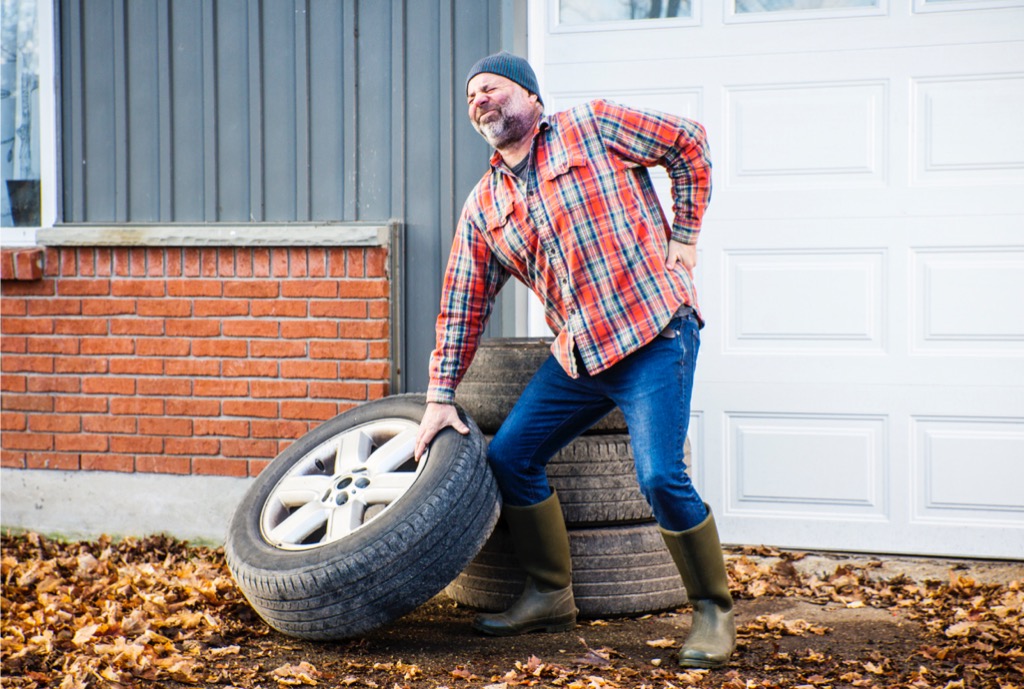
Lower back pain is one of those things everyone seems to just accept. Like it’s part of the deal. You get older, your back hurts, that’s life. You stop deadlifting. You stop gardening. You stop bending over to pick things up off the floor with any confidence. You develop a whole system of lowering yourself carefully and hoping for the best.
Here’s what nobody tells you. You’re still bending over constantly. You’re just doing it without any preparation, any awareness, or any of the muscle groups that are supposed to be involved. Your back is doing all of it. Every time.
The deadlift didn’t break your back. The pattern you’ve been moving in did. And the solution isn’t to avoid the pattern. It’s to actually fix it.
The Two Patterns Nobody Explains
There’s a spectrum of how people stand and move, and most people with chronic lower back pain land somewhere on it.
On one end you have the swayback. Picture a dog with its tail tucked between its legs. Hips shifted forward past the ankles, pelvis tucked under, lower back flat, knees slightly bent. It looks relaxed. It is not. In this position the glutes are already shortened before you do anything. There’s nowhere for them to go. The hamstrings are in a bad spot too. So every time you hinge or bend, the lower back takes over because nothing else can.
On the other end you have the anterior tilt. Think Kim Kardashian red carpet. Exaggerated arch, hips tipped forward, lower back compressed, chest puffed out, knees locked. The lower back is constantly compressed, the hip flexors are short and pulling everything forward, and when it comes time to actually load the hips, the body doesn’t know how.
Different shapes. Same problem. The hips aren’t doing their job so the back does everything.
Research on lumbar pain consistently points to poor hip mobility and altered movement patterns as significant contributing factors, not just structural issues like disc degeneration or arthritis. Studies on chronic low back pain show that imaging findings like bulging discs often show up in people with zero pain at all. The structure isn’t always the story. How you’re moving is.
[photo: diagram or video showing hip hinge pattern vs lower back compensation]
The Myth That Needs to Die First
Deadlifts always hurt your back. You have to keep a perfectly flat back when you lift anything. You just have to live with lower back pain once you have it.
All of that is wrong. Or at least way more complicated than it sounds.
Research on spinal loading shows that the spine is remarkably resilient and designed to handle load. The issue isn’t the load itself, it’s load on a spine that isn’t supported by the muscles around it. When the hips can’t contribute, the spine takes everything. That’s the problem. Not the movement.
There is also no one perfect deadlift technique. There are principles. Push the hips back, feel the hamstrings load, keep the bar close. How that looks varies person to person based on hip structure, mobility, and build. Someone with longer femurs is going to look different than someone with shorter ones. Trying to force everyone into the same shape is exactly how people get hurt.
The Client Who Finally Felt His Glutes
I had an older client who had never once felt his glutes fire during a lower body exercise. Not on squats, not on bridges, not on anything. He genuinely thought he just had weak glutes.
He didn’t. He was in a deep swayback pattern and his pelvis was so tucked under that his glutes were shortened before any movement started. They couldn’t contribute even if they wanted to.
We spent a few weeks working on hip mobility, finding movements he could actually feel something during, and eventually introduced the landmine deadlift. It’s one of the more foolproof hinge variations because the arc of the bar literally guides your hips back into the right position. Doesn’t give you much choice.
He texted me that evening. First time he had ever felt his glutes working.
That’s not a flexibility win. That’s a position win.
[photo: landmine deadlift setup showing hip position]
The Kid Who Was Using the Wrong Map
Then there was a guy right out of college. Early twenties, felt like his body was falling apart. Chronic lower back pain switching sides, shooting down his legs sometimes. He came in frustrated and kind of scared. Felt old at 22 which is a genuinely terrible way to feel.
He had been told he was in an anterior tilt and had been doing all the anterior tilt drills for months. The problem was he was actually in a swayback. The drills weren’t just not helping, they were making things worse because he was working from the wrong starting point.
Once we identified the actual pattern and started working from there, things moved pretty quickly. Pain started calming down, movement started improving. He wasn’t broken. He was just working from the wrong map.
The Woman Who Learned to Love Deadlifts
Then there was a middle aged woman who was convinced deadlifts were not for her. She had thrown her back out gardening twice and shoveling once and had connected bending over with pain. Completely understandable. But she was also limited in ways she didn’t have to be. Couldn’t lift her grandkids comfortably. Couldn’t do yard work. Felt fragile doing normal things.
We didn’t start with deadlifts. We started with bridges. Simple hip extension lying on the ground, teaching her body what it felt like to load the glutes and hamstrings without any spinal loading at all. Then we added range as she built it. Found the entry point that worked for her body right now, not where she thought she should be.
Eventually she was doing landmine deadlifts and telling me it was her favorite movement in the gym. Because it made her feel strong. Because she wasn’t limited anymore.
[photo: bridge exercise showing glute and hamstring engagement]
Step One: Figure Out Which Pattern You’re In
Before you do anything else, you need to know where you’re starting from. These two tests take about two minutes.
The Straight Leg Raise Test
Lie on your back. Keep one leg flat on the ground. Lift the other with a straight knee. If you can’t get past 45 degrees and your resting leg rotates outward, you’re likely in the swayback pattern. If your leg goes up past 70 or 80 degrees pretty easily, you’re more likely in the anterior tilt pattern.
The Mirror Check
Stand naturally and look at yourself sideways. Hips shifted forward past your ankles, lower back flat, knees slightly bent? Swayback. Big arch in the lower back, chest forward, knees locked? Anterior tilt.
Most people recognize themselves pretty quickly with one of these.
Step Two: Start the Right Drill for Your Pattern
[photo: frog stretch setup with elbows on box]
If You’re in the Swayback Pattern: Frog Stretch
Get on your hands and knees and place your elbows on a low box or chair. Push your knees out wide and bring your hands and feet close together underneath you. The position opens up the inner hips and gives the pelvis room to shift into a better spot.
Take 5 slow breaths here. Exhale fully on each one and let the breath do the work. You’re not forcing anything. You’re creating space and letting your body settle into it.
If You’re in the Anterior Tilt Pattern: 90/90 Breathing
[video: 90/90 breathing with hamstring activation cue]
Lie on your back with your feet flat on a wall, knees and hips both bent to 90 degrees. Exhale fully and let your lower back press down into the floor. At the same time, pull your heels down into the wall without actually moving them. You should feel your hamstrings turn on. Hold that and take 5 slow breaths.
The exhale is what drives the position change. You’re teaching your body a new resting state, not just stretching into one. That’s why the hamstring cue matters. You’re not just breathing, you’re activating the right muscles while you do it.
Neither of these looks impressive. Neither requires equipment. Both are where real change starts.
From there the progression is adding movements in the range you actually have, building capacity as you build mobility, and finding the entry point for the hinge pattern that works for your body right now. Not the entry point you think you should be at. Where you actually are.
The poison really is the medicine. At the right dose, for your actual pattern, starting where you actually are.
🟠 Action Item of the Week
Find Your Pattern. Do One Drill.
Step one, figure out which pattern you’re in. Straight leg raise test: lie on your back, lift one leg with a straight knee. Can’t get past 45 degrees and your other leg rotates out? Swayback. Goes up past 70 or 80 degrees easily? Anterior tilt. Or just look sideways in a mirror. Hips forward, lower back flat, knees slightly bent? Swayback. Big arch, chest forward, knees locked? Anterior tilt.
Swayback: frog stretch. Elbows on a low box, knees wide, hands and feet close together underneath you. Take 5 slow breaths. Exhale fully on each one. Don’t force anything. Let the breath create the space.
Anterior tilt: 90/90 breathing. Feet flat on a wall, knees and hips at 90 degrees. Exhale and press your lower back into the floor. Pull your heels into the wall without moving them. Feel your hamstrings turn on. 5 breaths. Do it before anything else you’re already doing.