
Your Body's Been Telling You for Months. You Just Thought It Was Saying Something Else.
The busy working woman had been apologizing to me for months.
She’d show up to her 30 minute session on time, having eaten something beforehand, ready to work. And about ten minutes in, she’d go lightheaded. Not gassed, not out of shape lightheaded. The room would go a little swimmy and she’d reach for something to steady herself. We’d slow down, she’d collect herself, and she’d apologize like she’d let me down. She was convinced she was just bad at this. Some people can exercise, she figured, and she wasn’t one of them.
She never brought a water bottle. Not once. So instead of adding intensity or changing her program, I asked her a boring question: when do you actually drink water during the day? The answer was her morning coffee. And then nothing until dinner. She was walking into every single workout running on whatever was left from the night before, and blaming her fitness for a problem her fitness never had.
[Photo: a plain water bottle sitting on the gym floor next to a set of dumbbells]
The symptom it almost never uses is thirst
Here’s the thing most people never connect. Being even slightly low on water rarely bothers to announce itself as thirst. That would be convenient, and your body is not interested in convenient. Instead it hands you a pile of symptoms you’d never in a hundred years trace back to a water bottle.
Headaches. Dizziness. That flat, foggy, why-am-I-dragging feeling that sits on you all afternoon. Getting irritable for no reason around 3pm. Snacking when you’re not actually hungry, because your body’s signals get crossed and mild dehydration can read a lot like a snack craving. Trouble concentrating. Muscles that fatigue faster than they should.
Research on mild dehydration backs every bit of this up. And we’re not talking about crawling-through-the-desert dehydration. Studies have found that losing barely more than 1% of your body’s water, the kind of dip you can hit just from a normal day of not drinking much, drags down mood, energy, and focus. One set of studies out of the University of Connecticut found the adverse effects showed up whether people had just walked on a treadmill for 40 minutes or were sitting still. Same fog either way. Your body doesn’t care that you weren’t exercising. It just quietly makes everything cost more.
So you spend months troubleshooting the wrong machine. You blame your sleep. Your age. Your discipline. Your program. Meanwhile the actual note got lost in the mail, because it never once showed up wearing a “thirsty” name tag.
The older guy who kept nearly hitting the floor
I had another client, older guy, where this got genuinely a little scary. Every so often mid-workout he’d get so lightheaded we’d have to stop cold, get him sitting, get some water in him. By the time it hit, though, it was already too late to salvage the session. We’d just shut it down. The goal stopped being a good workout and became don’t let this man pass out in my gym.
He told me he drank water. He wasn’t lying. But whatever he was doing clearly wasn’t enough, because it kept happening. When we actually got deliberate about it, water with his breakfast, real water breaks built into the session instead of whenever he happened to think of it, the episodes stopped. Fully stopped. We went from planning around them to forgetting they used to happen.
The part that stuck with him wasn’t the fix. It was realizing how low he’d been operating this whole time. To him those episodes had felt random, like weather. Out of his hands. Turned out he just had no idea what a normal amount of water actually was, so he had no way to know he was nowhere near it. He said he felt lucky it hadn’t been happening even more often. Honestly, so did I.
The number nobody actually knows
This is the quiet problem underneath all three of these people. Almost nobody knows what the target even is, so they can’t tell how far below it they’re living.
Here’s a real anchor. The national guidelines put adequate total water intake at roughly 15.5 cups a day for men and 11.5 cups for women. That’s total water though, and this trips people up, so read it slow. Around 20% of that comes from food, and nearly every beverage counts toward the rest. So it’s not 15 glasses of plain water on top of everything else. Treat those numbers as a floor you’re trying to clear across the whole day, not a plain-water quota to grind out.
And yes, coffee counts. Tea counts. Seltzer counts. The old belief that caffeine dehydrates you is basically a myth at normal amounts. Your coffee is a net gain of water, not a loss. The only thing to watch is the sugary, high-calorie stuff, because juice and the sweet lattes will happily pour a snack’s worth of calories down you in the name of hydration.
[Video: quick clip pouring water into a glass alongside a cup of coffee, showing both count toward the day’s total]
Why chugging betrays you, and why electrolytes aren’t the hero
Once people finally believe hydration is the problem, they tend to fix it in one of two dramatic and mostly useless ways.
Some chug. They slam a huge bottle right before the gym to catch up in one heroic gulp, like they can cram eight hours of hydration into the parking lot. The problem is plumbing. Dump a big volume in all at once and your body reads it as surplus and sends a solid chunk straight to your bladder. Studies comparing chugging to sipping found people held onto only around 54% of what they gulped, versus roughly 70% when they spread the same amount out. You paid for the whole bottle and kept a little over half of it. The rest you rented, briefly, and returned about twenty minutes later.
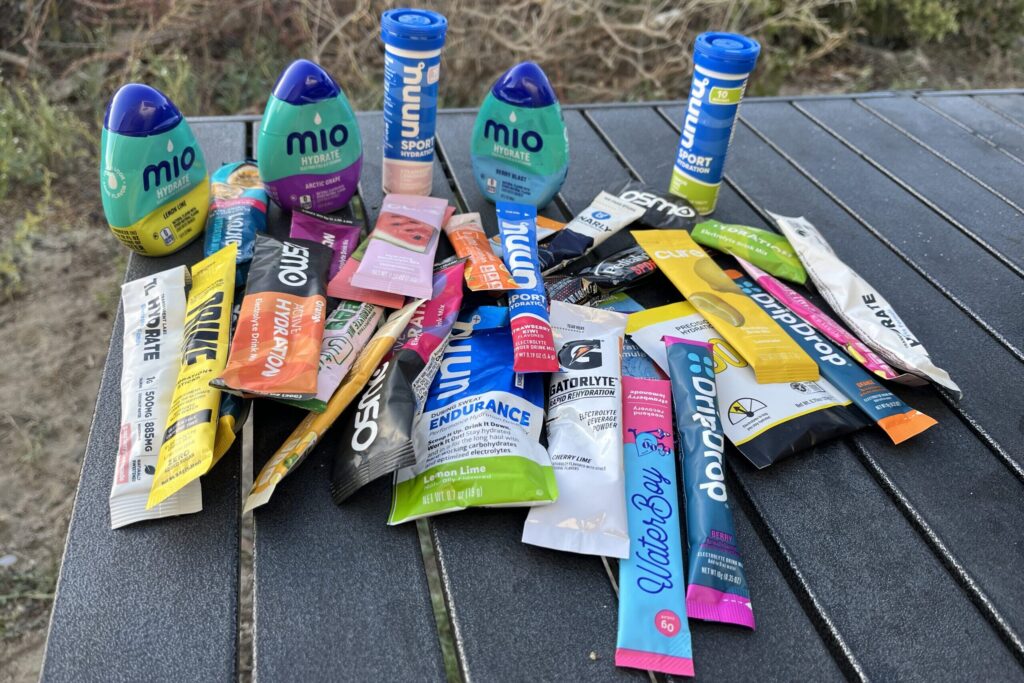
The others go shopping. They buy the electrolyte packet, the powder with the little scoop, and treat it like a cheat code. And I get why. “Just drink more plain water” sounds too stupid to be the answer to a problem that’s been quietly wrecking their week. It’s not sophisticated enough. So they go hunting for the interesting fix.
But electrolytes manage the water you already have. They don’t manufacture the water you never drank. I had a client who got these vicious headaches whenever she missed her morning coffee, headaches that wrecked the rest of her workday. Some of that was probably the caffeine. But when we looked closer, her coffee was carrying a huge share of her daily water, and skipping it yanked that volume out from under her. Her first instinct was electrolytes. She was sure that was the missing piece. She wasn’t actually low on electrolytes though. She was low on plain volume, and she’d gotten so fixated on the fancy fix she’d skipped right past the obvious one.
The check that beats your body to the punch
You don’t need an app or a fancy bottle with little time stamps printed up the side guilting you at 2pm. Look at the color when you go. Pale, like lemonade, means you’re in good shape. Dark, like apple juice, means you’re already behind and should top off. Nobody wants to hear their pee is a status report, but it’s the one readout your body hands you before the fog and the lightheadedness show up, so use it.
Then make it stupidly easy to act on. Don’t set a giant number and white-knuckle your way there. Staple water to things you already do without thinking. A glass before your morning coffee. A glass with every meal. Refill your bottle every time you refill your coffee. You’re not adding a chore to your day, you’re hitching a ride on habits that are already running.
The busy woman who apologized for months didn’t buy anything with a scoop in it. She got a water bottle and changed when she drank. She’s doing three full rounds now in the same half hour she used to barely survive, and we’re about to bump her up to full hours. She wasn’t bad at exercise. She’d just been quietly running on empty for months and had no idea that was a thing you could fix.
<div style=”text-align: center; margin: 40px 0;”> <a href=”https://tally.so/r/KY6gO8″ style=”display: inline-block; background: #FF6B35; color: #ffffff; font-size: 17px; font-weight: 700; text-decoration: none; padding: 16px 40px; border-radius: 8px;”>Work With Me</a> </div>