
Stop Waiting for the Perfect Stop. Great Defense Is What You Do After You Get Beat.
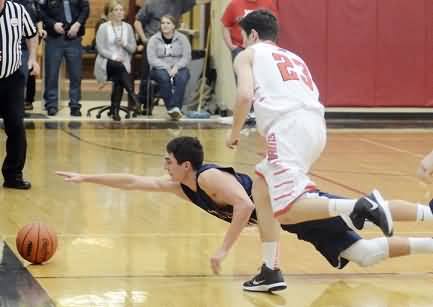
The middle schooler I train is not going to win a footrace. He knows it, I know it, and every quicker kid he’s ever guarded has known it within about four seconds. He’s not the strongest either. What he has is a genuinely good basketball brain. He reads plays, he knows where he’s supposed to be, he sees things developing before they happen.
And for a while, none of that helped him on defense. Because the second a faster kid beat him off the dribble, he was done. Mentally checked out. You could watch him decide the possession was lost, like missing one bus meant the whole day was cancelled. He’d been quietly taught, the way most kids are, that defense is a talent. Either you’re fast enough to stay in front of people or you’re not, and he’d already decided which one he was.
That belief is the single biggest thing holding young defenders back, and it’s completely wrong.
[Photo: a defender sprinting to recover, a step behind the ball handler but clearly still in the play]
Defense is barely about the first effort
Here’s the thing nobody explains to kids. Staying in front of someone for one dribble is the easy part. Anybody with fresh legs can slide their feet for a single possession. If defense were only that, it’d be a tryout skill, not a game skill.
The actual game is the second effort. And the third. And the miserable fourth one where your lungs are on fire and the offense is still moving. Because good offenses are built to make you fail the first time on purpose. They run a cut, you cover it, so they flow into a screen. You fight over that, so they swing it and cut again. They are not trying to beat you once. They’re trying to beat you eventually, betting that somewhere in that chain you’ll relax for half a second.
The whole art of team defense is refusing to give them that half-second. It’s exhausting, and that’s the point. Sustaining effort through a long possession is a real, trainable, physical skill, and it’s mental too. The best defenders treat their own fatigue as the opponent. Everyone else treats it as an excuse.
Getting beat is the beginning of the play
So let’s talk about the moment everyone thinks is the end: you get beat.
When my middle schooler gets blown by now, the possession is not over. It just entered its interesting phase. He does one of two things. He sprints to pick up his helper’s man, so the teammate who slid over to stop the ball isn’t the one left exposed. Or he turns and chases from behind and pokes at the ball while the driver is focused on the rim.
This is a real NBA concept, by the way, not something I made up for middle schoolers. It’s called “help and recover.” One defender helps stop the ball, and the beaten defender’s job is to sprint back and cover the gap, then recover to contest. When five players do it in sync, a broken possession turns into a trap, and the offense’s “advantage” evaporates. Getting a step on someone means nothing if the guy you beat is already back in the play, forcing you to finish over a second defender you didn’t plan for.
I tell my players: a step slower doesn’t mean a step out of the play. It means you have to want it about four seconds longer than the guy who beat you. That’s a choice, not a gift. Nobody’s born with it.
The pros with the best defensive reputations get beat constantly
Here’s the part that surprises kids. The defenders with the biggest reputations do not lock people up on the first try. They get beat plenty. What sets them apart is what happens next.
Marcus Smart won Defensive Player of the Year, and if you watch him, he isn’t shutting every drive down at the point of attack. He’s fighting, recovering, taking charges, poking balls loose, making the whole possession a nightmare rather than winning one clean rep. Jrue Holiday built his defensive reputation on late-game sequences where he recovers and makes the game-sealing play, the block from behind, the strip at midcourt, the effort that shows up in the last ten seconds when everyone else is gassed. These guys aren’t celebrated for never getting beat. They’re celebrated for how relentlessly they get back.
Why nobody values what they don’t measure
I had a high schooler who looked genuinely lost on the floor. Not because she couldn’t play defense, she absolutely could. She just didn’t see the value in it, so she let the offense run its little errands uncontested while she waited for her turn on offense.
You can’t lecture that out of a player. So we changed what counted. Her parents started tracking her defensive stops instead of her points, and we made a rule: a possession didn’t count as a win until she personally ended it with a steal, a block, or a rebound she was directly responsible for. One number, entirely hers, no teammates to share credit with.
It took about a week for her whole demeanor to flip. Once the effort had a scoreboard, she started hunting the ball like it owed her money. This tracks with how the actual sport is trending. The NBA now publicly tracks deflections, contested shots, and loose balls recovered, precisely because those effort plays disrupt offenses in ways that never showed up in the old box score. Someone finally decided to measure the fighting. Turns out when you measure it, people do a lot more of it.
How to train it
You can’t get better at recovering if you only ever practice from even. Real games throw you into disadvantage constantly, and most players have never once rehearsed what to do from behind. So they panic and freeze, which is the worst possible response and also completely fixable.
Set up a 1v1 where the offense starts with the advantage already handed to them. Live backdoor cut, or spot them a step past the defender before the whistle. The defender isn’t trying to prevent the advantage, it already happened. The job is to recover into the play and make the finish hard anyway. Get back to contest. Cut off the angle. Turn a layup into a tough runner. Do it in short bursts, over and over, until being beaten stops feeling like a catastrophe and starts feeling like a familiar problem with a familiar answer.
That’s the whole shift. Getting beat isn’t a verdict on whether you’re a good defender. It’s just the first sentence of the possession. The kids who understand that end up guarding players twice as athletic, and winning, while the fast kid walks off wondering why nothing worked.