
You Already Have a Step on Your Defender, Use It.
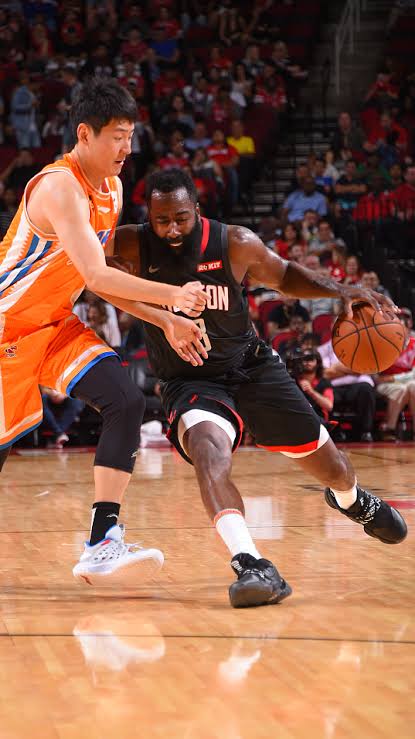
I had a middle schooler who could not figure out how to get past people. Sometimes it worked. Most of the time he’d start a drive, get walled off, and end up going nowhere. And the weird thing is he was still scoring, because the kid had a real gift for pulling tough contested shots out of nothing at the end of a busted possession.
Sounds like a strength. It wasn’t. Those tough shots only existed because he’d manufactured the tough situation himself.
He wasn’t failing to get by. He was giving the advantage back.
Here’s what he was actually doing. He’d catch the ball and immediately go into a show. Move, then another move, then a combo, running through everything in his bag like he was auditioning. He had this idea that scoring was supposed to look hard, that the highlight was the goal and the bucket was just the thing that happened at the end of it.
And every one of those extra moves handed time back to the defense. He’d have a defender beat off the first step, then do three more things and let the guy recover, and now he’s stuck taking a contested fadeaway he had to be a magician to make. He wasn’t struggling to beat people. He was beating them and then waiting around until they caught up.
So we made it boring. On purpose.
Sometimes the entire move was a hesitation and go. Sometimes a simple drop step. A basic cross, one time, done. Every so often an actual combo when the situation truly called for it, but that became the exception instead of the whole personality. The move stopped being the point. It became the key, the thing you use to get the door open and then you walk through, you don’t stand in the doorway showing everybody how many keys you own.
[Photo: coach demonstrating a simple hesitation-and-go with a player. Search: “basketball coach teaching hesitation dribble youth.”]
Most players are waiting for the defense to fall over
This is the part that changes players, and it’s so common I see it in almost everybody who struggles to drive.
They attack like they’re expecting the defender to do them a favor. Trip. Slide the wrong way. Part like the Red Sea. And when the defender just stays there like a normal human being, the offensive player panics and bails into another dribble move, and another, waiting for a gap that was never going to open on its own.
The gap doesn’t open on its own. You go take it. And the thing nobody tells you is that most of the time you already have a half-step on your guy. It’s already there. You just have never learned to use it, so you burn it dribbling in place.
Here’s how you use it. You attack the defender’s front foot, the one that’s up in their stance, and you drive your first step right past it. Then you get your shoulder to their hip and you keep it there. The second your shoulder is past their hip, the play is basically over, because now they’re chasing you from behind instead of sliding in front of you. A defender on your back is a defender who has already lost. They can foul you or they can watch. Those are the two options you’ve left them.
Being physical is not optional here. You’re not gliding past anyone. You’re using your body to hold the ground you took, leaning into them, sealing them behind you, refusing to give the step back. Half of driving is just being willing to make contact and not flinch.
I know this works because it saved my game
I was a shooter as a kid. Genuinely could not drive. I’d catch it, see a closeout, and my only plan was to shoot or panic. Driving felt like walking into a wall, so I avoided it, which made me easy to guard, because everybody knew all I wanted to do was shoot.
Then it clicked, and it clicked exactly like a light going on. I realized I’d had a step on my defender basically the whole time and I’d just been giving it away by dribbling around instead of driving through. Once I stopped waiting for space and started taking it, my whole game opened up. The only thing I had to get used to was contact. Driving into a body instead of away from it. Once I stopped flinching, I was a completely different player, and I wasn’t any faster or bouncier than I’d been the week before. I was just finally using what was already there.
The pros who built careers on the least flashy drive in basketball
[Photo: a pro guard finishing a layup through contact. Search: “NBA guard layup through contact defender.”]
Go watch Tony Parker. Four championships, one of the best drivers the league has ever seen, and he did almost none of it with fancy handles. His whole thing was getting downhill, cutting off the defender’s angle, and finishing with these plain little scoop layups. There’s a famous possession where he shoulder-fakes Anthony Davis, one of the scariest defenders alive, takes a single crossover, and just explodes down an open lane for an easy layup. One fake, one dribble, done. No show. He’d lean into his man, cut off the angle so the defender ended up trailing behind him instead of sitting on his hip, and by then the shot was a layup.
That’s the whole blueprint. Not a highlight bag. A step, a shoulder, and the guts to drive through.
You see the same skeleton in a lot of crafty scorers. It’s rarely the guy doing fifteen dribbles who’s actually hard to guard. It’s the guy who gets his shoulder past you on the first step and makes you chase. Change of pace does a ton of the work too. When you attack, get the defender moving, then change speed, they have to react to it, and that half-beat where they’re resetting their feet is the exact window you drive through. You don’t need to break ankles. You need to get them leaning, get a step, and go.
Why this actually works, not just why it looks good
There’s real logic under it. A defender can only react to what you show them, and reacting always takes longer than acting. When you change pace, you force them to process the change, reset their base, and rebalance, and all of that costs time. That lag is your window. It’s not magic, it’s just that the person moving second is always a step behind the person moving first.
And the physics of the hip are simple. Once your shoulder is past a defender’s hip, for them to legally stop you they’d have to get back in front, which means covering more ground than you while starting from behind. They can’t. That’s why great drivers look like they’re barely working. They win the position early and coast, while the kid running through his whole bag is working three times as hard for a worse shot.
What happened with my guy
He bought in, slowly. It’s not easy telling a creative kid to stop being creative. But once he felt what it was like to get a clean step and go, instead of manufacturing chaos and bailing himself out with a hero shot, he stopped fighting it. His drives got shorter and way more effective. He was scoring easier, getting to the line more, and he wasn’t gassed by the third quarter from doing forty moves a game.
He didn’t lose the creativity. He just stopped leading with it. Now the fancy stuff shows up once in a while, when it’s actually the right answer, which is exactly when it’s supposed to.
For Parents:
Watch how much energy your kid is spending on offense, and where it’s going. A lot of young players burn themselves out dancing around, running through move after move, and it looks like effort so it’s easy to praise. But the drives that matter are usually the quiet ones. When your kid makes the simple play, takes the first opening, cuts and scores without a whole production, tell them that was great. That’s the hard skill, even though it looks easy. If they come off the floor soaked and exhausted every game from their own moves, that’s usually not toughness, it’s wasted motion, and it’s leaving them with nothing in the fourth quarter.