
She came in because she had no time. Working constantly, and when she wasn’t working she was too drained to function. Sitting at a computer most of the day, same position for hours, barely moving. Somewhere in the middle of all that her wrist started hurting.
So she dealt with the wrist. Brace, rest, ice, Google. Everything pointed to carpal tunnel. Hours at a keyboard, repetitive motion, wrist hurts. Seemed pretty open and shut.
Except the wrist wasn’t the problem.
She had significant restrictions through her shoulder and ribcage, particularly in the front. Her shoulder couldn’t rotate inward the way it’s supposed to. And when a shoulder can’t do its job, the elbow and wrist pick up the slack. They weren’t built for that. They did it anyway. And eventually they started letting her know about it.
I pointed out what was actually driving it. Where the restrictions were, why the wrist was just the last stop on a longer chain. She took it from there. Restructured her day so she wasn’t locked in the same position for hours. Built in real breaks. Set a hard stop on work at night. Started moving more because she finally had the energy to want to.
Wrist calmed down. Energy improved. She started doing things after work instead of just surviving until bedtime. None of that came from treating the wrist.
[photo: overhead shoulder mobility or ribcage assessment]
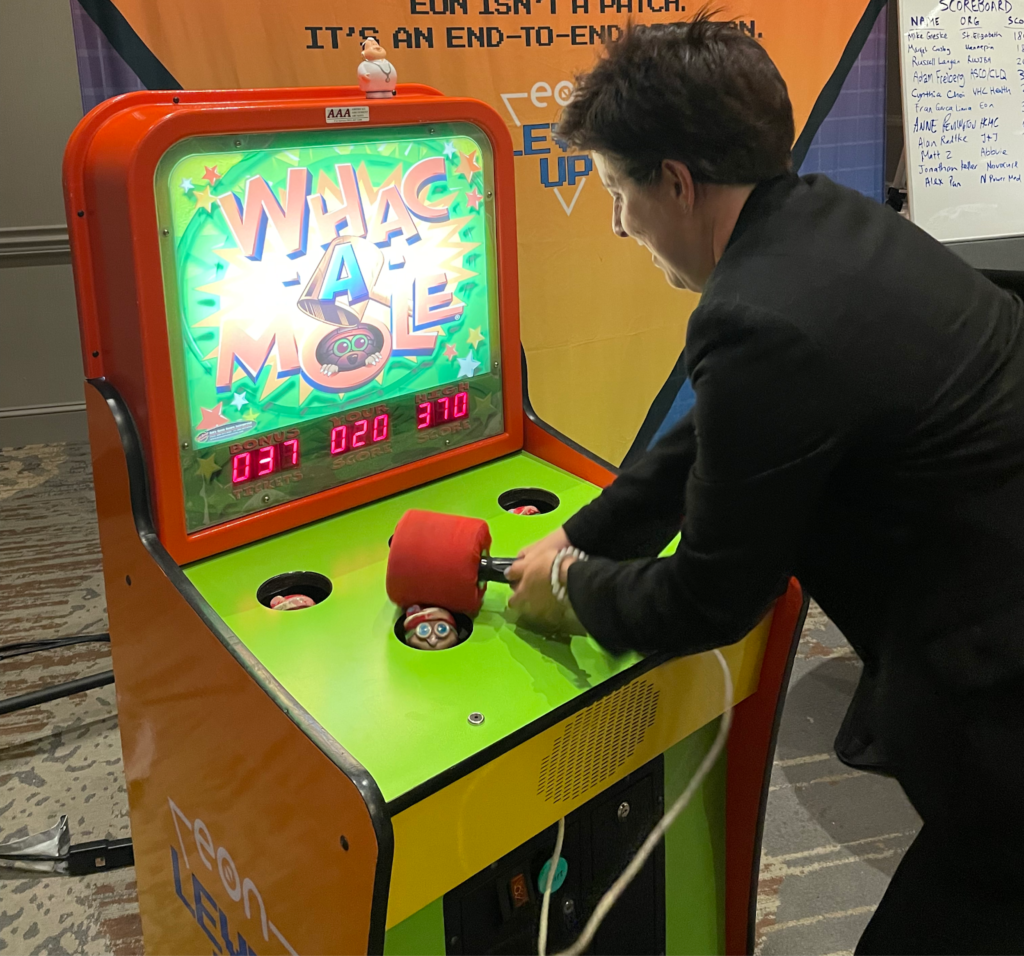
Why The Whack a Mole Keeps Going
Here’s what I see constantly. Something hurts, you address the thing that hurts, it calms down, then something else shows up. Neck. Upper back. Other shoulder. Foot. Knee. You’re chasing whatever is flaring up that week while the original source is just sitting there completely unbothered.
Your body doesn’t care about perfect mechanics. It doesn’t care about what your posture looks like or whether your movement patterns are optimal. It cares about surviving and getting tasks done. If one area can’t contribute the way it’s supposed to, your nervous system recruits something else that can. Doesn’t matter if that area was designed for the job. Doesn’t matter if it causes problems later. The goal gets accomplished and that’s all your body is trying to do.
You are genuinely built to compensate. Which is impressive. Also kind of a nightmare when you’re trying to figure out why things keep breaking down.
Pain research has shifted a lot on this. Pain isn’t just a damage signal from the exact spot that hurts. It’s an output from the central nervous system, shaped by tissue stress but also by load history, how much capacity the surrounding areas have, and how much threat your nervous system perceives. That’s why treating the painful spot in isolation so often doesn’t stick. The area hurts because it’s been compensating. Stop it from compensating without fixing what it’s compensating for and the load just moves somewhere else. Different spot, same problem.
The place that hurts is usually covering for something else. Fix the cover up without fixing the source and you’re just moving the mole to a different hole.
I’ve lived this myself. For years random things would flare up. Knee, lower back, hip, shoulder. I’d address each one, get some relief, feel good about it, and then something else would show up a few weeks later. Great system. Very efficient. Completely useless.
It wasn’t until I started looking at the whole thing, working on the proximal areas like hips, pelvis, ribs, and shoulder position, that the pattern actually changed. Flare ups got less frequent, less intense, way more predictable. Not because I found the magic fix for each individual thing. Because I stopped treating each individual thing like it existed in isolation.
[photo: simple visual showing proximal to distal chain, hip to knee or shoulder to wrist]
This Isn’t Just a Pain Thing
Here’s where it gets interesting. Because this exact pattern shows up everywhere, and most people never make the connection.
I had a client who kept getting sick. Constantly run down, always sore and achy after doing basically anything, digestion was off. He figured he just had a weak immune system. Bad luck. Maybe just getting older. The kind of stuff people say when they’ve accepted something they probably don’t have to accept.
He was eating out almost every day. Processed stuff constantly, almost no lean protein, no vegetables or fruit anywhere in sight. His body was probably chronically inflamed just from the baseline of what he was putting in. Research on diet and immune function is pretty consistent here: ultra processed food diets are associated with higher levels of systemic inflammation, and chronic low grade inflammation is linked to slower recovery, more frequent illness, and that general beat up feeling people tend to chalk up to age or bad luck.
He wasn’t sick because he had a bad immune system. He was sick because he was never giving his body what it needed to not be sick.
When he cleaned up what he was eating, added real protein, added some vegetables, things shifted. Not dramatically, not overnight. But the pattern changed. Got sick less. Recovery got easier. The achy thing mostly went away. He thought he was fixing one thing. He was actually fixing five at once without realizing it.
That’s what good nutritional habits actually do. Protein isn’t just for building muscle. It keeps you full, stabilizes blood sugar, supports immune function, and dramatically affects how beat up you feel after training. Research consistently shows higher protein intake reduces overall calorie consumption without requiring active restriction, just because hunger signals change. Vegetables and fiber aren’t just about micronutrients. They affect gut health, which connects to immune function, mood, energy, and recovery in ways most people never think to link together.
I’m working through my own version of this right now. I’m in a cut and ramped up fiber pretty aggressively trying to stay full. Ran into digestion issues, not going regularly, feeling dehydrated even when I thought I was drinking enough. Changes I made in one area were showing up as problems somewhere I wasn’t expecting. Now I’m dialing fiber back a little, adding more water, experimenting with crystal light to actually get the fluids in consistently. Still figuring it out. Which is kind of the whole point. Even when you understand the concept, you’re always working through it in real time on something.
[video: quick breakdown of protein and fiber as foundational habits]
Restructure, Don’t Just Add
The time version of this is where most people feel the most stuck, and also where most advice is the least useful.
The typical suggestion is to find time. Wake up earlier. Squeeze a walk in somewhere. Carve out 20 minutes for stretching. All of which sounds reasonable until you remember that most people are already running on empty by the end of the day. Adding one more thing to find time for is not a solution. It’s just more pressure.
The better question is what’s already happening that could just do more than one thing.
Your kid has a game or practice and you’re standing around for an hour anyway. That’s a walk. Put on something you actually want to listen to and it’s also a mental reset. You’re going to watch something at night regardless. Get on the floor and do some mobility work while it’s on and now you’re off your phone, your nervous system is actually winding down before sleep, and you got something done without it feeling like a thing you scheduled. You’re going to catch up with a friend at some point. Do it on a walk and two things that were already going to happen just became one slot.
None of this requires finding new time. It requires looking at what’s already there and making it work harder.
The client with the wrist told me at some point that she didn’t feel like she’d added anything. She’d just stopped letting the day run her. Real breaks instead of powering through. A hard stop at night instead of trailing off into more screen time. Once the structure was there the energy came back, and once the energy came back she started wanting to do more. She didn’t overhaul her life. She just stopped letting the default version of it make all the decisions.
Research on habit stacking shows that pairing a new behavior with an existing routine dramatically increases how likely it is to actually stick. You’re not protecting a new time slot from everything else competing for it. You’re just changing what happens inside one that already exists. Much less friction. Much easier to sustain long term.
Find One Level Up
Whatever is nagging you right now, there’s almost always something one level above it that’s actually driving it.
Pain that keeps moving: probably a mobility or load issue upstream, not the spot that currently hurts. Always getting sick, sore, or run down: look at what you’re actually eating before assuming your body is just defective. No time for yourself: the schedule is the problem, not the individual things you keep trying to fit in around it.
You don’t have to fix everything at once. You just have to stop repeatedly fixing the wrong thing. Make one change at the source and watch how many things downstream quietly sort themselves out. That’s not a guarantee. But it’s a much better bet than playing whack a mole forever.
Stop hitting the mole that’s up. Find out where it’s coming from.
|
If you’ve been dealing with something that keeps coming back no matter what you do, it’s worth figuring out what’s actually driving it. That’s what the first session is for. Fill Out the Intake Form |