Nobody Taught You the Most Important Part
Every player wants to be faster. Every player wants a better first step. Every player wants to get to their spots without working this hard.
Most of them are working on the wrong things.
They’re doing more dribble moves. More conditioning. More shooting. Meanwhile the actual reason they can’t get anywhere on the court is sitting right underneath them. Literally. It’s their feet.
Footwork is the most undertaught skill in basketball. Not post moves. Not pivoting. All of it. How you drive, how you stop, how you change direction, how you get into your shot, how you recover on defense, how you close out. Every single thing you do on a basketball court runs through your feet first. And almost nobody is teaching it seriously.
The Myth That Needs to Die
Ask most players what footwork means and they’ll say pivoting. Maybe a drop step in the post if they’ve had a good coach somewhere along the way.
That’s about five percent of what footwork actually is.
The other ninety five percent is happening on every single possession and most players have never thought about it once. Which means they’ve spent years building movement habits that are actively working against them and have no idea.
[photo: side by side of efficient vs inefficient first step off a drive]
The High Schooler Who Was Easy to Guard
I had a high school player who could not get by anybody. Not because he was slow. Not because he couldn’t dribble. He had both of those things. He just used footwork that made him the easiest person on the court to guard.
Every drive started the same way. Same first step, same angle, same timing. He never once attacked the defender’s feet. Never made them move. Never gave them a reason to react. Defenders didn’t have to think. They just had to wait.
When we broke it down he had never been taught how to actually drive on a basketball court. He knew how to pivot. That was it.
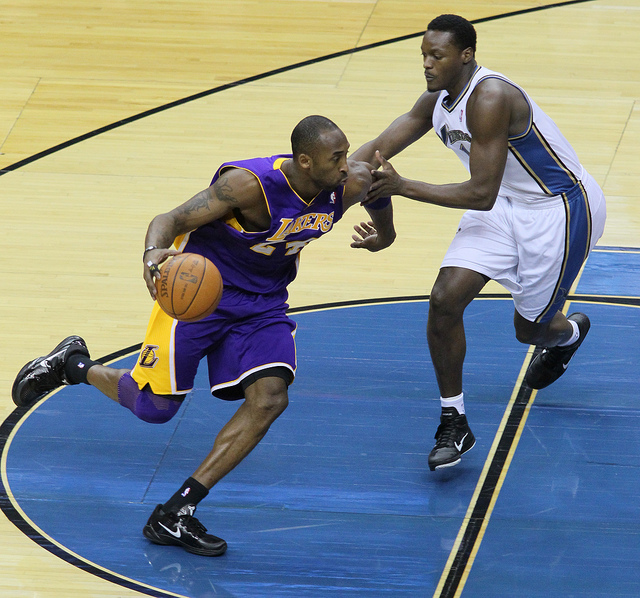
What he was missing was the drop. Micah Lancaster, one of the most respected skill trainers in the world, built his entire footwork system around this concept after spending a year studying the movement patterns of elite players using cameras mounted under the floor. The drop is the foundational attacking posture you get into off the dribble. Open stance, same side foot forward as your dribbling hand, center of gravity low, ball staying on that side, body leaning forward creating a threat the defender has to respect.
When you get into a proper drop you are presenting an explosive problem. The defender has to react. They have to make a decision. And once they move, you have an opening.
My player had been driving upright with his feet under him, giving defenders nothing to respond to. Once he learned to get into a low open stance and attack the defender’s feet, make them commit, he started creating angles he had never had before. Defenders who had barely moved against him were suddenly scrambling.
[video: drop footwork reps from stationary, jab, and live dribble positions]
The Middle Schooler Who Couldn’t Get Her Shot Off
I had a middle school girl who was a decent shooter in practice. Games were a completely different story. Defenders were closing out and she had no answer. Every catch she was hopping straight up to get set, which added a full second to her release and had her off balance half the time.
The problem wasn’t her shot. It was how she was getting into it.
She had never been taught shooting footwork. Specifically she didn’t know how to move her feet before the ball arrived or how to use a step in to stay low and load into her shot so she could fire the moment she was ready. She was catching and then organizing herself, which in practice against no pressure works fine. Against a live closeout it doesn’t work at all.
We worked on reading the pass and moving her feet in the air before the catch, then stepping in with her inside foot to stay low and maintain momentum into the shot.
Her release got faster. Her balance got better. But the thing that surprised her most was how many more shots suddenly felt open. Because her feet were ready before the ball arrived she could read the defender mid-catch instead of after it. Shots that used to feel rushed started feeling like she had all the time in the world. Same defenders. Completely different experience.
[photo: player catching and stepping into a shot in one fluid motion]
The Young Defender Who Kept Getting Beat
I had a young player who could not stay in front of anyone on defense. Worked hard, tried hard, just kept getting beat. Kept being told to move his feet. Nobody ever told him how.
The problem was his recovery footwork. When he got beat off the dribble he would try to slide sideways to catch up, which is one of the slowest ways to move on a basketball court. By the time he repositioned the offensive player was already gone.
Lee Taft, one of the leading experts in athletic movement and speed development, has done extensive work on the hip turn as a recovery pattern for exactly this situation. When a defender gets beat the fastest way to recover is to open the hips, turn, and sprint to get back in front, then transition into a shuffle once position is reestablished. It feels counterintuitive because you’re briefly turning away from the offensive player. But it gets you there faster than anything else.
Once we taught him the hip turn and sprint pattern he stopped getting blown by completely. He started staying in front long enough to make offensive players uncomfortable. Uncomfortable offensive players make mistakes. He started causing turnovers just by being there.
[video: hip turn and sprint recovery pattern into defensive shuffle]
Why This Matters Athletically Too
This isn’t just about skill moves and defensive recovery. Footwork is also how you express your athleticism more efficiently.
Research on speed and power development consistently shows that how you approach a jump or a sprint matters as much as how strong or fast you are. The penultimate step, the second to last step before a jump or acceleration, is where most of that energy gets loaded or lost. A long, low penultimate step lets you store elastic energy and redirect it upward or forward. Popping straight up into a jump or taking choppy steps into an acceleration bleeds that energy before it can be used.
Isaiah Rivera holds the highest officially tested vertical on the planet at 50.5 inches. He’s 6’2 and built that jump from scratch, documented the whole thing publicly. One of the things his training at THP Strength emphasizes heavily is approach mechanics. How you get into a jump matters as much as how strong your legs are. The penultimate step loads the system. If it’s short and choppy you’re bleeding energy before you leave the ground. If it’s long and low you’re storing it and redirecting it upward.
Most players never think about this once. They just jump the way they jump. Training that one step is one of the fastest ways to add inches to your vertical without touching a weight.
The Footwork Is Usually Where the Answer Is
Every skill problem has a footwork problem underneath it. Can’t finish? Look at your first step. Can’t get your shot off? Look at how you’re catching and stepping in. Can’t stay in front? Look at how you’re recovering.
You don’t have to fix everything at once. Pick the area costing you the most and spend two or three weeks doing nothing but reps on that one thing. The game will start looking different faster than you’d expect.
⚡ Drill of the Week
Pick Your Problem. Start There.
Offense: Drop Footwork. Start stationary, get into your drop position. Same side foot forward as your dribbling hand, open stance, center of gravity low, ball on that side. Then do reps from a jab and from a live dribble. Stay low, vary your stance width, go both directions. This is the foundational attacking posture for every drive you’ll ever take.
Defense: Hip Turn and Sprint. Start in a defensive stance. React to a ball movement cue, open your hips and sprint to reposition, then transition back into a shuffle once you’re back in front. Do not try to slide sideways to recover. Open, sprint, reestablish.
Athleticism: Approach Jumps. On any jump you’re already doing, focus on the second to last step. It should be long and low. If you’re popping straight up into your jump you’re losing power before you leave the ground. Just change that one step and feel the difference.
For Parents: Before you focus on the specific skill that’s frustrating your kid, look at the footwork underneath it. Can’t finish at the rim? Look at the first step. Can’t get the shot off? Look at how they’re catching and stepping in. Can’t stay in front on defense? Look at how they’re recovering. The footwork is usually where the answer is hiding.