
Most of my job is making shots smoother. This one was about the opposite.
I worked with a middle school girl who had a beautiful stroke. I mean it. If you handed me a clip of just her upper body and asked me to grade the shot, I’d have given her high marks and moved on. No hitch, no stalling, no awkward stopping point. The ball came up and out in one clean motion and left her hand quick.
Then you’d watch the ball.
Brick off the backboard. Airball. One that managed to clang the back rim and still come up short, which I’m fairly sure violates a law of physics. She could rip a smooth, fast shot off from anywhere on the floor and had no earthly idea where it was going once it left her fingers. The form said one thing. The scoreboard said another.
And here’s the part that made both of us a little crazy. Every drill I reached for made it worse.
When the Usual Fix Is the Wrong Fix
For most players, the path is the one I write about all the time. Smooth it out. Kill the hitch. Get rid of the stopping points and the hesitation so the shot flows up and out without a traffic jam in the middle. Nine times out of ten that’s the work, and a lot of players got those stopping points because somebody coached the shot into stiff little segments in the first place.
So naturally I started this girl on the stuff that keeps the ball moving, the fluid, rhythmic, never-stop drills. Every single one made her shot more random. Smoother and more random at the same time, which felt like a betrayal of everything I know.
That’s when it clicked that I’d been treating her like she had the problem everybody has. She didn’t. She had the rare opposite one, and it’s uncommon enough that most coaches never run into it, so when they do, they reach for the loosen-it-up toolkit and bury the kid even deeper.
Her shot didn’t need to flow more. It had nothing but flow. What it was missing was structure.
All Flow, No Frame
A coach I work with has the perfect phrase for this. He says some shots need bones.
I’ll be honest about my bias here. I usually steer players away from the rigid, locked, mechanical approach to shooting, because in most hands it slows the shot down and stamps a hitch right into it. There’s a coach in the area, Coach Behn, who teaches that more structured, old-school style, and she’s well respected for it. I teach it differently for a reason, and most of the time I’d push a player the other direction entirely. But watching this girl, I had to admit that the tool I normally avoid was the exact one this kid needed. You adapt to the player in front of you, not the philosophy in your head.
Because here’s what “no structure” actually looks like. The shot is all smoothness and no frame. The ball comes out fast and hot, the kid can generate plenty of power from anywhere, but there’s nothing underneath holding the angles in place. So the release is a little different every time. A few degrees here, a little extra wrist there, and at the rim those tiny differences turn into bricks and airballs and the occasional shot that does both.
The quick tell, if you want to spot this in your own gym: watch the ball, not the stroke. A shot that looks pretty but lands somewhere random every single time is a structure problem, not a smoothness problem. Pretty and scattered is the signature.
What the Research Actually Says About “Locking It In”
Here’s where it gets interesting, because the science cuts both ways and you have to know which way applies to your player.
Research on shooting accuracy keeps landing on the same idea: accuracy depends less on how much power you can generate and more on whether you can repeat your release. One study found that a shooter’s accuracy is best understood as their ability to control the deviation in how fast the ball leaves their hand. Not the speed itself. The consistency of it. Studies also show that greater stability up the chain, through the shoulder and trunk, reduces the variability in the smaller joints right at release, which is exactly the wobble that was eating this girl alive.
Now the part you have to be careful with. Newer research on skilled, high-level shooters actually found that a little variability between the shoulder and elbow can go along with better accuracy, which sounds like it torches everything I just said. It doesn’t. It means elite shooters have earned the freedom to self-organize, to make tiny mid-shot corrections, because they already own the structure underneath. They built the bones years ago and now they get to be loose on top of them. A developing player with no structure hasn’t earned that yet. You don’t get to freelance the framing before you have a frame. Give a kid with no structure even more freedom and you just get faster, prettier chaos.
So for the rare structureless player, the move is real but specific. Add structure without slowing the shot down. Lock the joint angles in more, especially the elbow, and teach the transition from up to out so the shot still gets off quick. The goal was never a stiff, robotic stroke. It’s just enough frame that the smoothness has something to hang on.
The Kid Who Felt Like His Shot Was Broken
I had a high school boy whose elbow and wrist wandered all over the place during a single shot. He told me flat out it felt broken, like he never knew which version was coming. Same kind of problem, older body, more frustration baked in.
We went the structure route. I had him keep his elbow locked in and put him in positions that forced it, including a drill I borrow from Larry Bird, where the ball stays up high and you simply aren’t allowed to let it drop. Bird built his whole shot around keeping that elbow pointed at the rim no matter how he caught it, and the payoff was that even his misses were consistent. He said himself that when he missed, it was always the same miss, short or spinning out the same way, never scattered left and right. That’s the dream for a kid like this. Predictable beats pretty.
We did a ton of post fades too, because fading away forces you to hold your arm angles steady or the shot has no chance. He started keeping those angles locked, and then something good happened. He could do it off the dribble. At speed. The structure didn’t slow him down once it became his, it made him automatic.
[Video suggestion: a player holding the ball high and steady at the set point, not letting it drop, to show the locked overhead position]
The Kid Who Shot Like Bill Cartwright
Then there was a middle school boy who went the other direction entirely. No structure either, but instead of firing fast and wild, he never got the ball to come up and out smoothly. So his fix-attempt turned into a slow, deliberate, two-second pause at the top before he’d finally push the thing toward the rim.
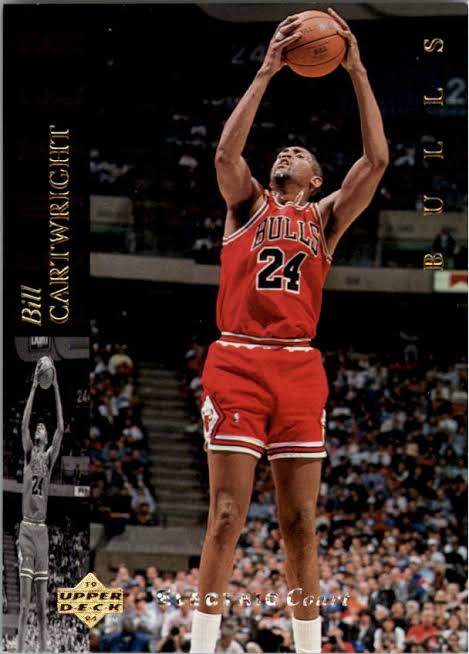
If you’re old enough, picture Bill Cartwright at the free throw line. Seven foot one, ball held way up over his head like he’s posing for a trophy, then a slow bend and release. Looked completely insane. Here’s the kicker though: it worked. Cartwright shot 77 percent from the line over a 15-year career with that form. Structure wasn’t his problem.
It was this kid’s problem in a game, though, because a two-second wind-up gets your shot swatted into the third row. He had the same missing piece as the other two, no real frame, but it showed up as a stall instead of a spray.
What finally fixed him was the least glamorous thing imaginable, and it only worked once he started doing it on his own without me standing there. Ball lift form shots. Squat down, lift the ball slowly up to the set point, bring it back down to the waist along the same path, then shoot while keeping the legs still so the arms have to hold the angles and he could actually feel the structure. Slow and boring on purpose. One day it just clicked, his elbow had bones, and the two-second pause was gone. Now he’s automatic too.
So How Do You Know Which Kind You’ve Got
Watch the result before you touch the form. If the shot looks rough but the ball goes in, leave it alone, you’ll do more harm than good. If the shot looks rough and the ball goes everywhere, and especially if it stalls or hitches on the way up, that’s usually a smoothness problem, and most of my other writing is about fixing that.
But if the shot looks gorgeous and the ball still goes everywhere, fight your instincts. Don’t tell that kid to relax and follow through. That’s medicine for the opposite illness. That kid needs a little structure, a little frame, a few joint angles that stop drifting. Give the smoothness some bones and let it keep its speed.